2024
2020 until February 2020, the Nicola Erni Collection has devoted its attention to Mario Testino with a breathtaking and large-format staging of some of his most beautiful and unique fashion photographs.
In addition, publicly exhibited for the first time is the extensive collection of the works by Jean-Michel Basquiat. Included were numerous works on different media from the early 1980s, monumental paintings and collaborations with Andy Warhol, and includes pieces up to 1988, the year of his death.
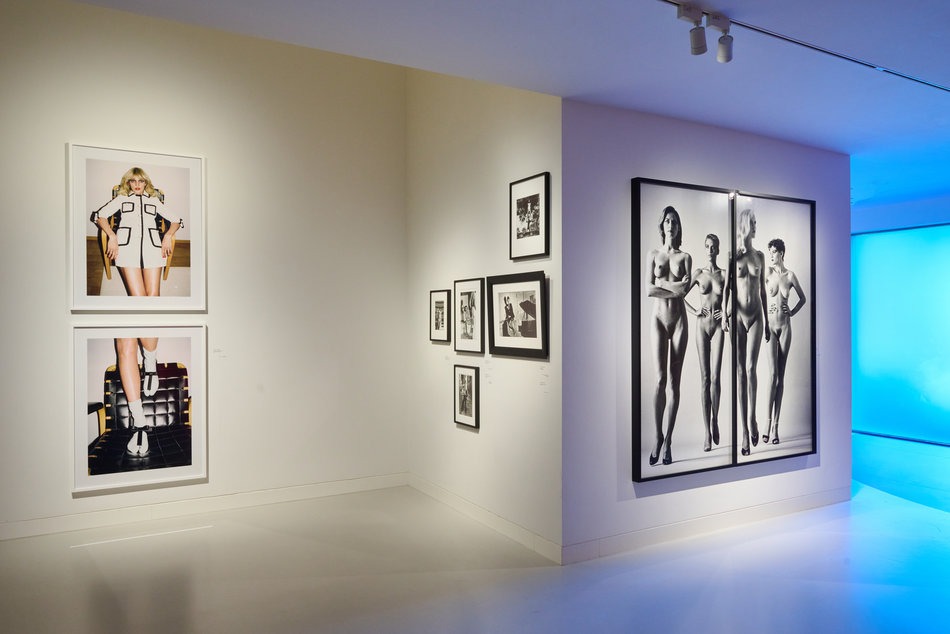
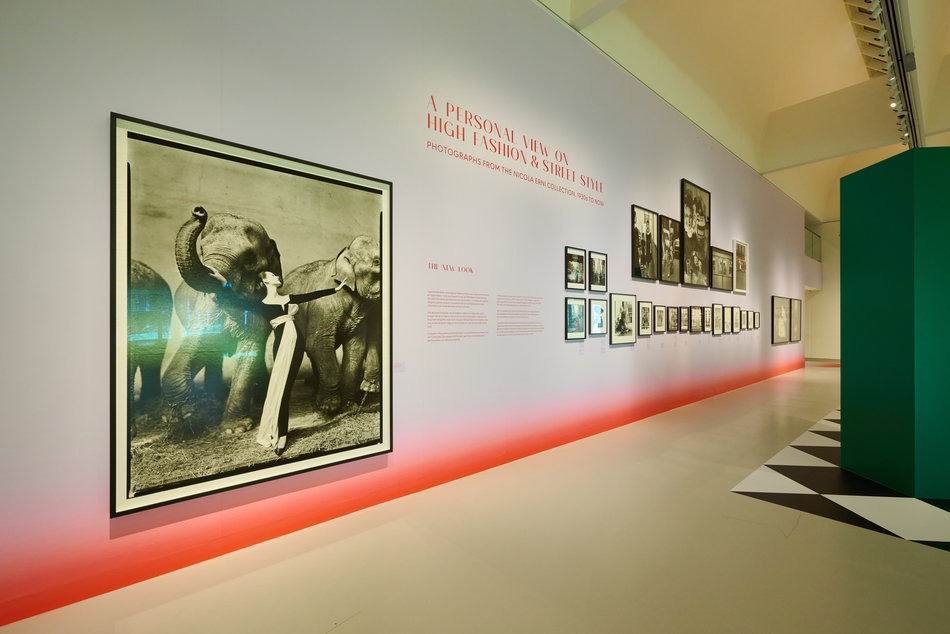
Rounding off this first publicly accessible exhibition is a large selection of photographs by iconic figures such as Richard Avedon and Jacques Henri Lartigue as well as established and emerging artists including Erik Madigan Heck, Rashid Johnson, Helmut Newton, Tim Noble & Sue Webster, Richard Prince, Yinka Shonibare CBE, Emma Summerton and Juergen Teller.
Artists
Richard Avedon
Photographer. Born 1920 in Berlin. Died 2004 in Los Angeles.
Helmut Newton had already completed an apprenticeship with a Berlin fashion photographer and remained true to fashion even during his years in exile. In the mid-1950s he returned to Europe and started working for Vogue and various other fashion magazines. Having achieved international fame during his lifetime, Newton’s legendary staged black-and-white photographs of “femmes fatales” possess a narrative character full of erotic glamour.
Jean-Michel Basquiat
Painter. Born 1960 in New York. Died 1988 in New York.
Jean-Michel Basquiat arrived at painting from the graffiti and hip hop scene. Within eight years he created an oeuvre as fascinating as it is complex. The art-historical canonisation of Basquiat’s works is as diverse as the interpretation of them is subjective. Basquiat was very receptive and well-read and alongside autobiographical references he incorporated into his art his vast knowledge: of the streets; of historical, sociocultural and art-historical erudition; of literature, music, comics, symbols, and visual references from TV and mass media.
Esther Haase
Fotografin. 1966 in Bremen, Deutschland geboren. Lebt und arbeitet in Hamburg und London.
Esther Haase studierte Tanz an der Staatlichen Akademie in Köln und trat darauf als Tänzerin dem Theater am Goetheplatz in Bremen bei. Anschliessend studierte sie bis 1993 an der Hochschule der Künste in Bremen Grafik-Design mit Schwerpunkt Fotografie. Der Durchbruch gelang ihr 1998 mit einer Modestrecke für das deutsche Magazin Stern, welche sie in Kuba fotografiert hatte. Seither gilt sie als eine der bekanntesten deutschen Modefotografinnen und bereist mit ihrer Kamera im Auftrag für Magazine wie die italienische Vanity Fair, die französische Madame Figaro, Vogue India, Harper’s Bazaar und die deutschen Titel Stern, Madame und ICON die Welt. Werbekunden sind unter anderem Victoia’s Secret, Chopard, Laura Biagotti und Guess.
Esther Haase ist ausserdem bekannt für ihre sensiblen Portraits. Sie fotografierte unter anderem die deutschen Schauspielerinnen Hannelore Elsner, Iris Berben und Gudrun Landgrebe, ebenso die Sängerin Nena sowie die legendäre englische Mode-Designerin Vivienne Westwood.
Erik Madigan Heck
Photographer. Born 1983 in Excelsior, Minnesota. Lives and works in Connecticut and New York.
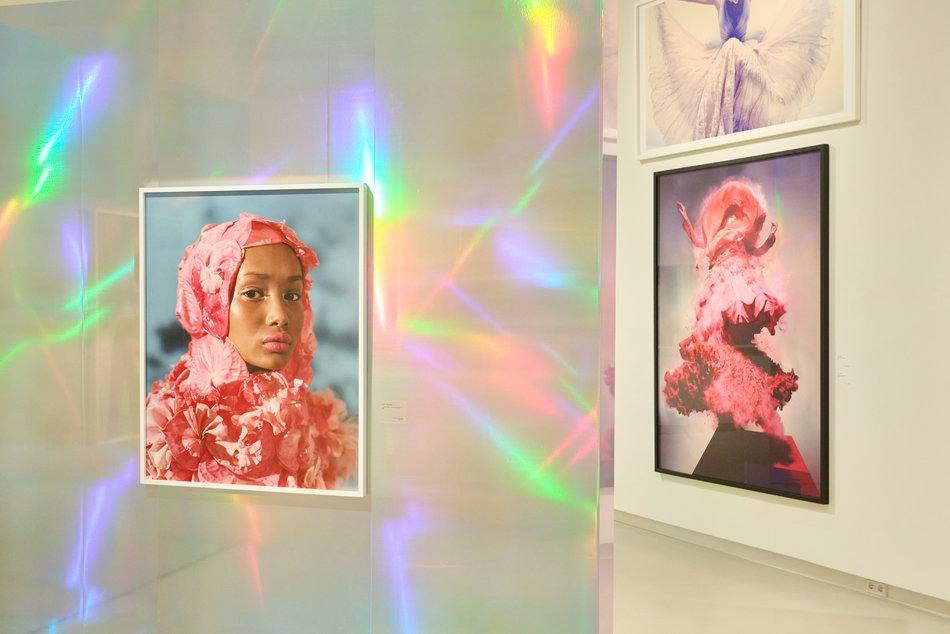
Erik Madigan Heck has been working as a fashion photographer since 2012. Already in 2007 he founded the Nomenus Quarterly, a collaborative platform for artists working in the worlds of photography and the fine arts. Heck uses digital post-production and stylistic means in his photography to achieve a painterly quality.
Rashid Johnson
Painter, sculptor, filmmaker, photographer. Born 1977 in Chicago. Lives and works in New York.
Rashid Johnson works with various media – painting, drawing, sculpture, ceramics, photography, film and monumental installation. His oeuvre draws on autobiographical references and African American symbolism, particularly in terms of the materials he uses, such as black soap, shea butter, black tiles and graffiti. Johnson’s works address issues of cultural identity and social belonging as well as the emotions associated with them.
Jacques Henri Lartigue
Photographer. Born 1894 in Courbevoie near Paris. Died 1986 in Nice, France.
Already in childhood Jacques Henri Lartigue was taking photographs, designing photo books and writing in a journal. He studied painting at the Académie Julian and remained a self-taught photographer. It was only in the early 1960s that Lartigue was discovered in New York and began working as a fashion photographer in 1966. He achieved international fame and his snapshot-like photographs document and celebrate life over a period of more than eight decades and celebrate life.
Helmut Newton
Photographer. Born 1920 in Berlin. Died 2004 in Los Angeles.
Helmut Newton had already completed an apprenticeship with a Berlin fashion photographer and remained true to fashion even during his years in exile. In the mid-1950s he returned to Europe and started working for Vogue and various other fashion magazines. Having achieved international fame during his lifetime, Newton’s legendary staged black-and-white photographs of “femmes fatales” possess a narrative character full of erotic glamour.
Richard Prince
Photographer and painter. Born 1949 in the Panama Canal Zone, USA. Lives and works in New York.
Richard Prince’s work has been examining the myths and archetypes of American popular culture since the mid-1970s. He works with diverse media and is best known for his series of nurses and cowboys. Prince is considered a pioneer of Appropriation Art and deliberately copies other artists and recontextualises found materials – such as advertising images – in order to address fundamental questions of authorship and originality.
Yinka Shonibare CBE
Multimedia artist. Born 1962 in London, where he currently lives and works.
Yinka Shonibare CBE spent most of his childhood in Lagos, Nigeria, before returning to London at the age of 17. He has described himself as a “post-colonial hybrid” and “global citizen”. Shonibare works with a broad range of media, including his trademark use of the batik / wax print fabric associated with Africa. In spite of the overarching themes of race, class, cultural and national identity, and colonialism, Shonibare doesn’t consider himself a political artist, and he contrasts the oftentimes seriousness of his subject matter with the sheer beauty of his works.
Emma Summerton
Photographer. Born 1970 in Sydney, Australia. Lives and works in London and New York.
Emma Summerton has been working as a commercial fashion photographer since 2005. Inspired by films, Summerton aims to convey emotions with her photography and sets great store by their narrative character. She sees fashion as a platform for personal freedom and individual expression wholly detached from social expectations.
Juergen Teller
Photographer. Born 1964 in Erlangen, Germany. Lives and works in London.
Though Juergen Teller has been working as a commercial fashion photographer since 1996, he doesn’t shy away from parodying the fashion industry in his work. Teller is particularly interested in the interaction between the photographer and the model, and with his direct and unadulterated gaze creates raw, honest images that neither idealise nor embellish but rather celebrate the idea of imperfect beauty.
Mario Testino
Jean-Michel Basquiat & Andy Warhol
Painter. Born 1960 in New York. Died 1988 in New York.
Photographer, painter, filmmaker. Born 1928 in Pittsburgh, Pennsylvania. Died 1987 in New York.
At the initiation of a Swiss gallery owner, the already established Andy Warhol met the up-and-coming artist Jean-Michel Basquiat in the autumn of 1982. Between 1984 and 1985 the artists collaborated on approximately 130 works, constantly inspiring each other: Warhol returned to his painterly beginnings; Basquiat experimented with silk-screen printing. Competition would remain be an integral part of their friendship. Warhol’s death in 1987 greatly affected Basquiat.
Tim Noble & Sue Webster
Installation artist duo. Born 1966 in Stroud and 1967 in Leicester, UK, respectively. Live and work in London.
Tim Noble and Sue Webster have worked together since 1996 and are considered part of the “Young British Artists” (YBAs). Inspired by the punk movement and questioning the status quo, their installation and sculptural work is essentially comprised of shadow works and light works. At their core, the works are about contrast: light versus shadow, form versus anti-form, art versus commerce.
Doug Aitken
from May 2024
Doug Aitken (American, b. 1968)lives and works in Los Angeles and is known as a multimedia artist. After finishing his studies at the Art Center College of Design he built his reputation on architectural interventions and installations that intervene in public space. Defying definitions of genre, he works in an array of media, including photography, video, sound and sculpture. Aitken aims to reimagine the nature of what art can be and how we experience works of art.
Jean-Michel Basquiat
Jean-Michel Basquiat (American, 1960-1988) was a painter who lived and worked in New York. He arrived at painting from the graffiti and hip-hop scene around 1980. Within eight years he created an œuvre as fascinating as it is complex. The art-historical canonisation of Basquiat’s works is as diverse as the interpretation of them is subjective. Basquiat was very receptive and well-read and alongside autobiographical references he incorporated into his art his vast knowledge of the streets, of historical, sociocultural and art-historical erudition, of literature, music, comics, symbols, and visual references from TV and mass media. During his creative period in the 1980s he became great friends with the famous pop-art artist Andy Warhol and the two created over 130 collaboration works together.
Elmgreen & Dragset
Michael Elmgreen (Danish, b. 1961) and Ingar Dragset (Norwegian, b. 1969) both live in Berlin and since 1995 have worked as an artist duo under the name Elmgreen & Dragset. With their work they examine objects in their historical, political, cultural and sociological context, question the status quo and re-contextualise. By so doing, Elmgreen & Dragset walk a line between art and architecture, installation and performance. Their international breakthrough came with the permanent Installation Prada Marfa in 2005, when they installed a sham Prada store in the middle of nowhere in the Texas desert. The installation The Collectors was their contribution for the adjacent Danish and Nordic Pavilions at the 53rd Venice Biennale in 2009. Since 1997 they have exhibited regularly in key international museums.
Keith Haring
until April 2024
Keith Haring (American, 1958-1990), known for his illustrative depictions of figures and symbols, was an artist and social activist. Initially planning to become a commercial artist, he soon changed his mind and chose to study at the School of Visual Arts in New York. The school was a hub for the Downtown New York art scene. His Pop art emerged from the New York City graffiti subculture of the 1980s. Haring’s popularity grew out of his spontaneous drawings in the subways – chalk outlines of figures, dogs and other stylised images on empty black advertising spaces. In his pieces he combined graffiti, hip-hop and urban aesthetics that were both playful and engaged with social issues.
François Halard
from April 2024
François Halard (French, b. 1961) is a photographer and artist known for his interior and architectural photographs. Trained at the École des Arts Décoratifs in Paris, he was noticed by major names in the decoration and fashion press while still a student. First, he began working for Decoration International, and then with Conde Nast art director Alex Liberman. In 1984, François moved to New York City where he began regular commissions for several Conde Nast publications, including American Vogue, Vanity Fair, GQ, and House & Garden. After 10 years, he decided to work as an independent photographer and create works that are timeless. He lives and works in Arles.
Rashid Johnson
Rashid Johnson (American, b. 1977) is a conceptual artist working and living in New York City. He received his first critical attention in 2001, when his works were shown in the Freestyle exhibition at the Studio Museum in Harlem. Johnson works with various media, including painting, sculpture, ceramics, photography, film and monumental installation. His oeuvre draws on autobiographical references and African American symbolism, particularly in terms of the materials he uses, such as black soap, tropical plants, shea butter, tiles and graffiti. He addresses issues of cultural identity and social belonging as well as the emotions associated with them.
Steven Meisel
from April 2024
Steven Meisel (American, b. 1954) lives and works in New York. Meisel studied fashion illustration at the Parsons School for Design in New York where he later taught part-time. He started working for the fashion designer Roy Halston Frowick as an illustrator and thereupon moved to Women’s Wear Daily. As a side job, he photographed models for a model agency and was fascinated by the medium to which he dedicated himself from then onward. As one of the very first photographers, Meisel signed a major contact with the publisher Condé Nast to create every cover for Vogue Italia from 1988 to 2014. He also worked for numerous other magazines. e.g. W Magazine and Vanity Fair Italy.
Julian Schnabel
Julian Schnabel (American, b. 1951) lives and works between New York and Montauk (Long Island). Schnabel studied art at the University of Houston (1969–73) and attended an Independent Study Programme at Whitney Museum of American Art (1973–74). After a first stay in Italy in 1977, Schnabel paid another visit to Europe a year later and was particularly inspired by the architecture of Antoni Gaudí in Spain. The idea for his renowened large-format paintings made with broken ceramic plates has its roots in that very first trip to Barcelona. Beside the so-called “plate paintings”, Schnabel experiments with a vast rage of materials and substrates to create his monumental works.
Mario Testino
until December 2023
Mario Testino (Peruvian, b. 1954) is one of the most renowned fashion and portrait photographers of our time, having risen to international fame in 1997 with a portrait of the late Princess Diana. His photographs are a reflection of his personality, whether in their joyful colourfulness, sexy sensuality and relaxed serenity, or in his models’ trust in Testino as a photographer and the touching intimacy of his portraits.
Tim Walker
Tim Walker (British, b. 1970) creates otherworldly photographs. His fiction and fantasy compositions often involve combinations of interior and exterior and changes of scale. Tim Walker became interested in photography at the Condé Nast library in London where he worked on the Cecil Beaton archive. After graduating in Photography from the Exeter College of Art in Oxford, he worked as an assistant to Richard Avedon in New York. Soon after, Walker began shooting fashion stories for Vogue and W Magazine. Walker’s photographs are nostalgic for an era of innocence and exuberance, youthful imagination and unique aesthetics. The artist lives and works in London.
Ai Weiwei
from July 2024
Ai Weiwei (Chinese, b. 1957) is known for his provocative works that blend art with social commentary and political activism. His work spans various media, including sculpture, installation, photography, and film challenging the status quo and advocates for social justice. Ai Weiwei studied animation at the Beijing Film Academy before moving to the United States in 1981. After returning to China in the early 1990s, Ai Weiwei became a prominent figure in the Chinese art scene. The concept artist is a vocal critic of the Chinese government, focusing on human rights and freedom of expression. His activism has led to multiple clashes with authorities, including his high-profile arrest in 2011. Despite these challenges, his works are exhibited in major museums and galleries worldwide, and he remains a pitoval figure.
Harley Weir
Harley Weir (British, b. 1991) studied Fine Art at Central Saint Martins College and is known for creating intimate images and films. Before embarking on a career as a fashion photographer, she moved back and forth with ease between personal and commercial work. Weir’s images are often carefully composed with a highly attuned sense of colour and mise-en-scène. One encounters a candid naturalism that refers to historical models and contemporary portraits. Having shot numerous campaigns for luxury brands, compelling editorials and a series of personal projects, she has become a leading force in the photography and film industries.